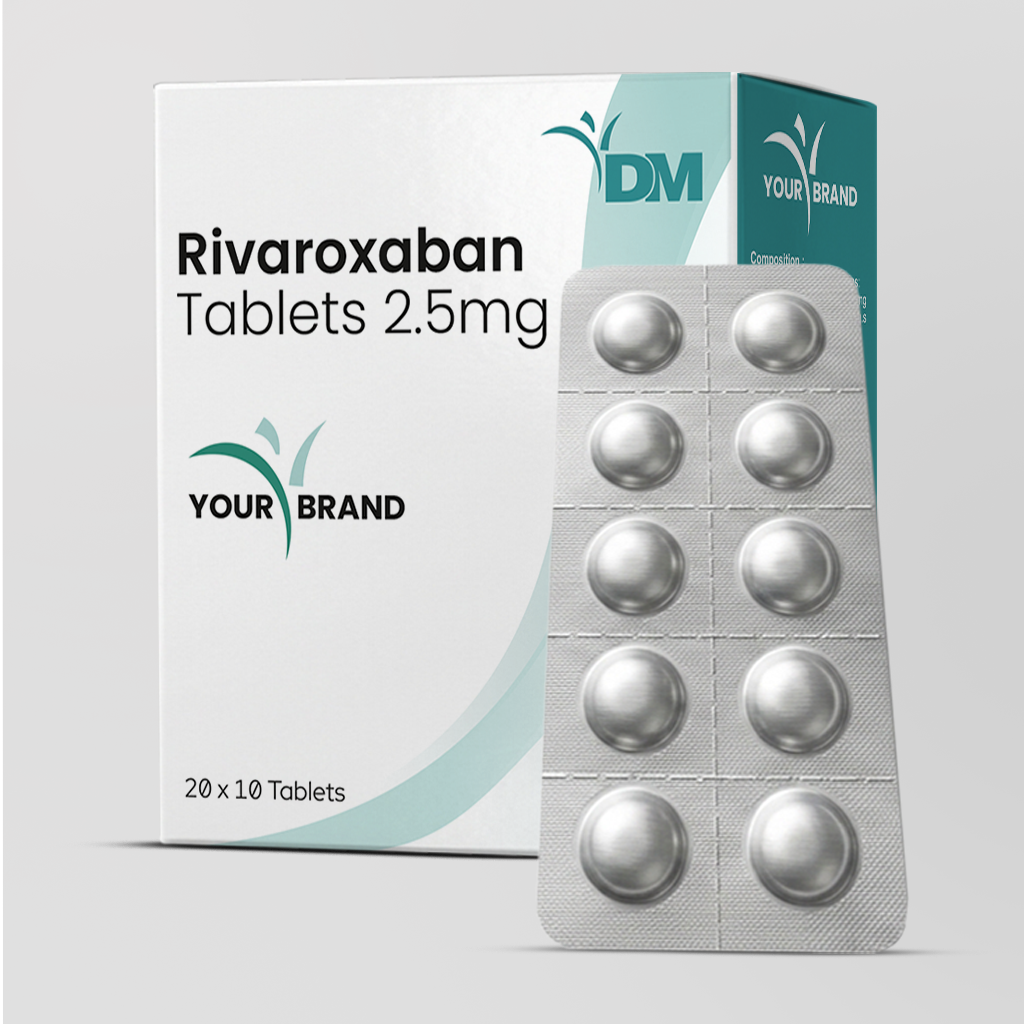
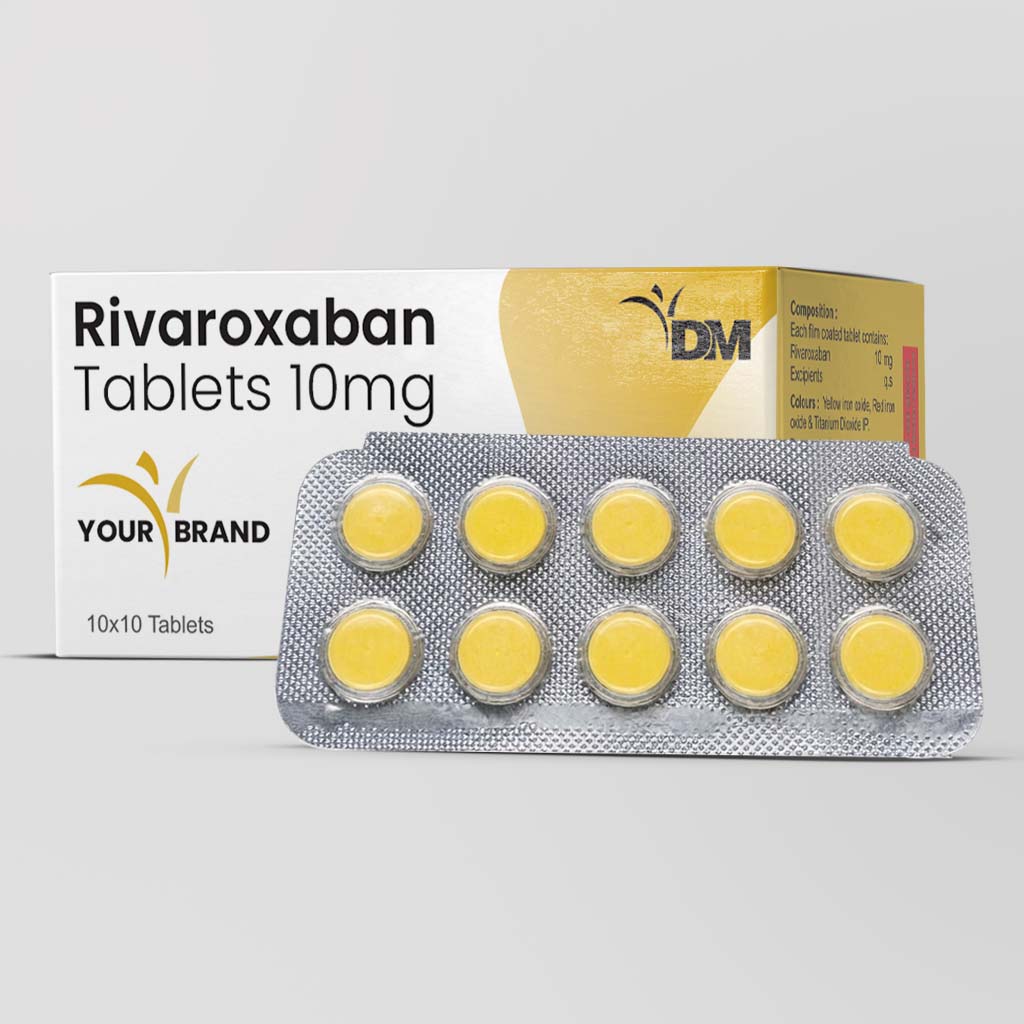
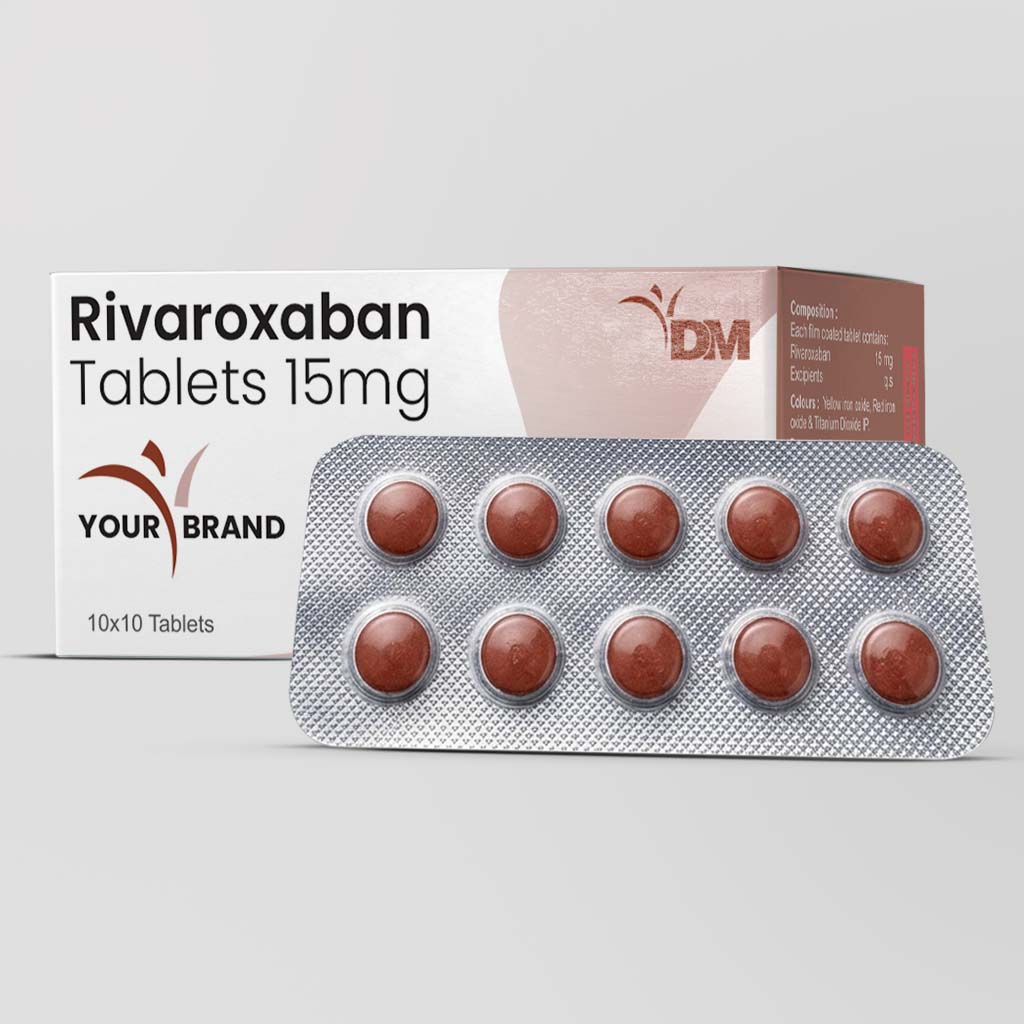
Rivaroxaban Tablets

Project Image

Therapeutic Indication

Prevention of stroke and systemic embolism in non-valvular atrial fibrillation
Treatment of deep vein thrombosis (DVT)
Treatment of pulmonary embolism (PE)
Prevention of recurrent DVT and PE
Thromboprophylaxis after hip or knee replacement surgery
+91 85919 78885

Rivaroxaban

Tablet

Rivaroxaban is an oral anticoagulant that selectively inhibits Factor Xa, thereby preventing thrombin formation and blood clot development. It is widely used for the prevention and treatment of thromboembolic disorders such as deep vein thrombosis (DVT), pulmonary embolism (PE), and stroke prevention in patients with non-valvular atrial fibrillation.

Speciality Cardiology
Tags Anticoagulant | Factor Xa Inhibitor
Strength
  • 2.5 mg
  • 5 mg
  • 10 mg
  • 15 mg
  • 20 mg
Packing Size
  • 10 Tablets

Check all Tablets Range

Click to know More

Mechanism

Rivaroxaban selectively inhibits Factor Xa, a key enzyme in the coagulation cascade responsible for the conversion of prothrombin to thrombin. By reducing thrombin generation, it prevents fibrin clot formation and thrombus development.

Pharmacokinetics

  • Absorption: Rapidly absorbed with high oral bioavailability (80–100% for lower doses).
  • Distribution: Highly protein bound (~90–95%).
  • Metabolism: Metabolized in the liver (CYP3A4/5, CYP2J2).
  • Elimination: Excreted via urine and feces.
  • Half-life: 5–9 hours (young adults), 11–13 hours (elderly).

Side Effects

  • Bleeding (major or minor)
  • Anemia
  • Nausea
  • Dizziness
  • Fatigue

Contraindication

  • Active pathological bleeding
  • Severe hypersensitivity to rivaroxaban
  • Severe hepatic impairment
  • Conditions with high risk of bleeding

Interaction

  • Strong CYP3A4 inhibitors (e.g., ketoconazole, ritonavir): Increase bleeding risk
  • Strong CYP3A4 inducers (e.g., rifampicin, phenytoin): Reduce effectiveness
  • NSAIDs & antiplatelets: Increased bleeding risk
  • Other anticoagulants: Additive anticoagulant effect

Warning and Precautions

This has been prescribed for the patient's specific condition. It may be dangerous to any other person.

  • Monitor for signs of bleeding
  • Use cautiously in renal impairment
  • Avoid abrupt discontinuation (risk of thrombosis)
  • Use with caution in elderly patients
  • Not recommended in severe liver disease
  • Not recommended during pregnancy and lactation

Dosage

As directed by the Physician.